What is a Context?
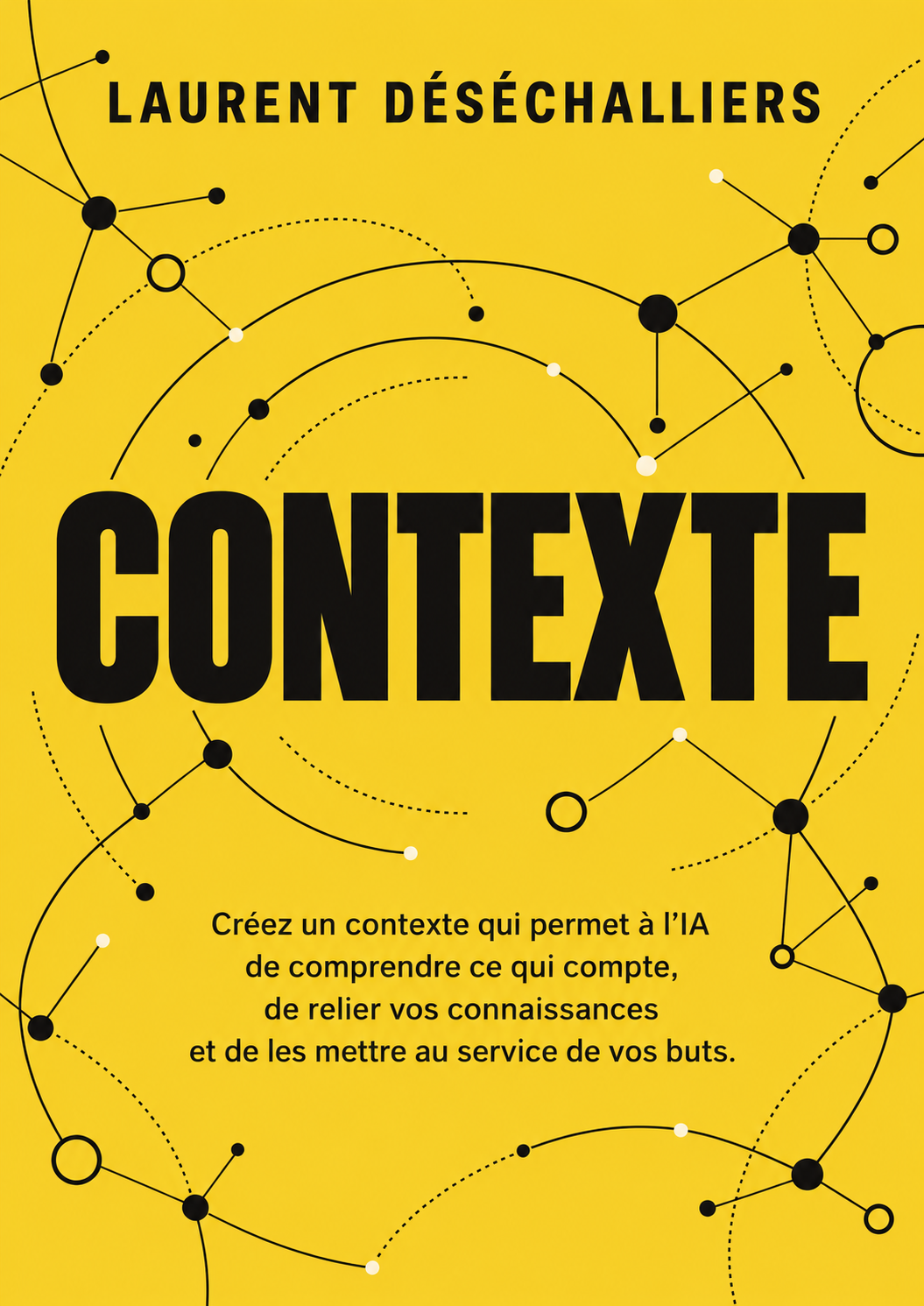
A context is a system bounded by a mission defined by a person. Within it, an AI organises and draws on what we know, where that knowledge comes from, how the pieces connect and where the work stands, helping people reach their goal without starting over. In the process, the system builds a lasting body of knowledge: what it produces remains available, grows richer over time and can be reused for other purposes.
The book
After a good many busy evenings, I can announce it: my first book comes out on 15 October 2026.
It deals with a question that has become central to working with generative AI: how to maintain context over time. Not a model's context window — a technical constraint that will keep changing — but context in the sense of the work itself: the goal being pursued, the sources, the ideas, the decisions made and how far the work has progressed. Kept outside the model, they remain available from one session to the next, whatever tool you happen to be using.
What I propose is a system: a space bounded by a mission, where a person and an AI move towards a goal together without rebuilding everything with every conversation. The AI traces an idea back to its origin and picks up a draft at the point where it was left. The person remains responsible for meaning and decisions.
But a system that remembers is not enough. The context preserves the path as well as the outcome: the choices and their reasons, the options set aside, the contradictions left unresolved. It safeguards the reasoning behind the work: it can recall a decision, flag an inconsistency and bring back an objection I had raised myself three weeks earlier.
And because every trace is structured and leads back to its origin, a reusable body of knowledge builds up from session to session, with no extra effort.
The book does not start from a finished theory. It starts from problems I encountered: five hundred emails that had become impossible to follow, ideas scattered across several tools, and responses for clients that had to be prepared without losing the work already done. It tells how the system came about, what it changed in my own work and which mistakes gave it its present shape.
The table of contents, extracts and publication details will appear here in the coming weeks.